A cast iron skillet is a kitchen staple revered for its durability and exceptional heat retention. However, maintaining its seasoned surface can be a bit tricky. Many home cooks find themselves puzzled over the best way to clean this beloved cookware without stripping away its natural non-stick properties.
Understanding the right cleaning techniques not only preserves the skillet’s seasoning but also enhances its performance over time. With a few simple steps, anyone can keep their cast iron skillet in top shape for years to come. This guide explores effective methods that ensure your skillet remains a reliable partner in the kitchen.
Importance of Cleaning a Cast Iron Skillet
Cleaning a cast iron skillet is essential for maintaining its performance and longevity. Proper care preserves the seasoning and ensures the cookware remains a valuable kitchen asset.
Benefits of Proper Care
- Enhances Durability
Careful cleaning helps maintain the skillet’s integrity, allowing it to withstand high temperatures and resist wear.
- Improves Non-Stick Properties
Consistent maintenance promotes a well-seasoned surface, improving food release, which simplifies cooking and cleaning.
- Promotes Flavor
Proper cleaning prevents the buildup of old food residues, ensuring each dish retains its intended flavor without interference from previous meals.
- Increases Lifespan
Regular attention to maintenance extends the skillet’s lifespan, allowing it to serve multiple generations when cared for correctly.
Consequences of Neglect
- Rust Formation
Neglecting to clean and dry a cast iron skillet can lead to rust development, compromising its functionality and safety.
- Loss of Seasoning
Failing to maintain the skillet can strip away the seasoning, making it less effective and more prone to sticking.
- Unpleasant Odors
Food residues left unaddressed can cause lingering smells, affecting the overall cooking experience and flavor of future dishes.
- Health Risks
Accumulated debris and bacteria pose health risks, potentially impacting food safety and cooking quality.
Best Way to Clean Cast Iron Skillet
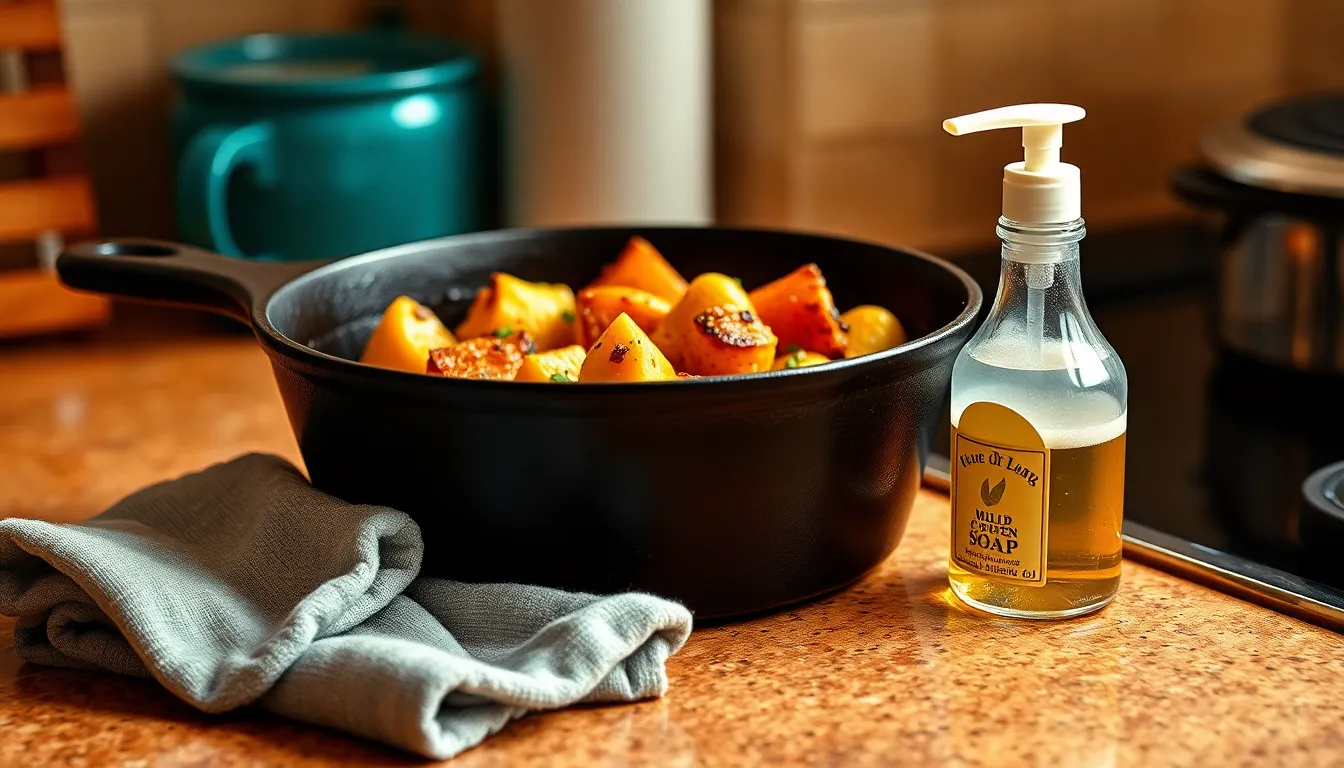
Cleaning a cast iron skillet requires specific techniques to preserve its seasoned surface and ensure longevity. The right tools and a careful process contribute to maintaining the skillet’s performance.
Essential Tools and Supplies
- Non-abrasive scrubber: Use a sponge or brush designed for cast iron to prevent scratching the surface.
- Mild dish soap: Select a gentle soap to help remove stuck-on residues without stripping the seasoning.
- Water: Utilize hot water to assist in loosening food particles.
- Towel or paper towels: Keep these handy for drying and maintaining the skillet’s surface.
- Cooking oil: Choose a lightweight oil like flaxseed or vegetable oil for re-seasoning the skillet after cleaning.
Step-by-Step Cleaning Process
- Let it cool: Allow the skillet to cool slightly after cooking, but clean it while it’s still warm to prevent food from hardening.
- Rinse with hot water: Pour hot water into the skillet to loosen any debris.
- Scrub gently: Use a non-abrasive scrubber to clean the surface, focusing on areas with stuck food. Apply mild dish soap if necessary.
- Rinse thoroughly: Rinse the skillet under hot water to remove any soap residue and food particles.
- Dry immediately: Wipe the skillet with a towel or paper towels to prevent rust. Heating it on low for a minute can help ensure full dryness.
- Re-season if needed: Apply a thin layer of cooking oil to the skillet’s surface if the seasoning appears dull. Heat it on low for a few minutes to enhance the seasoning.
Maintaining these practices ensures a well-cared-for cast iron skillet that performs effectively for years.
Common Mistakes to Avoid
Avoiding certain mistakes can enhance the longevity and performance of a cast iron skillet. Thorough awareness of these pitfalls leads to better maintenance practices.
Using Soap and Detergents
Using soap and harsh detergents can strip the skillet’s seasoning. While small amounts of mild soap may be acceptable, strong detergents cause damage. Always select a non-abrasive scrubber for cleaning. Focus on rinsing with hot water and ensure complete dryness afterward. Soap should be an exception, not a rule.
Ignoring Seasoning Maintenance
Ignoring seasoning maintenance decreases the non-stick properties and leads to rust. Regularly re-season the skillet after cleaning if its surface appears dull or rough. Applying a thin layer of cooking oil and heating the skillet reinforces its protective layer. It’s essential to carry out this process every few uses, especially after cooking acidic foods, which can erode the seasoning.
Tips for Maintaining Cast Iron Skillets
Maintaining a cast iron skillet involves regular care and attention to preserve its functionality and enhance its lifespan. Implementing effective techniques can prevent damage and keep the skillet in optimal condition.
Regular Seasoning Techniques
Regular seasoning protects the skillet and improves its non-stick properties. Follow these techniques for effective seasoning:
- Choose the right oil: Use oils with high smoke points, such as flaxseed oil, grapeseed oil, or vegetable oil.
- Apply a thin layer: Coat the skillet with a thin, even layer of oil using a paper towel. Avoid excess oil to prevent sticky residue.
- Heat the skillet: Place the skillet upside down in the oven at 375°F (190°C) for one hour. This process allows the oil to polymerize and create a durable non-stick surface.
- Cool before storing: Allow the skillet to cool completely in the oven. Proper cooling prevents cracking and preserves the seasoning.
Storage Best Practices
Proper storage plays a crucial role in maintaining the skillet. Follow these best practices for effective storage:
- Store in a dry place: Ensure the skillet is completely dry before storage to prevent rusting. Moist environments can promote corrosion.
- Use paper towels: Place a paper towel inside the skillet to absorb moisture and protect the surface from scratches during storage.
- Avoid stacking: If stacking skillets, alternate with protective layers, like cloth or paper, to prevent potential damage.
- Store in a cool area: Keep the skillet in a well-ventilated, cool area to minimize temperature fluctuations and moisture buildup.
Following these maintenance tips can help home cooks maximize the performance and longevity of cast iron skillets.
Maintaining a cast iron skillet is essential for its longevity and performance. By implementing the right cleaning techniques and regular care, home cooks can ensure their skillets remain in prime condition. Avoiding harsh soaps and prioritizing re-seasoning after cleaning helps preserve the skillet’s seasoning and non-stick properties.
With proper attention and maintenance, a cast iron skillet can last for generations, enhancing flavors and providing a reliable cooking surface. Embracing these practices not only protects the skillet but also elevates the overall cooking experience. Investing time in the care of cast iron cookware ultimately pays off in delicious meals and lasting durability.